Route Guides
The Kyoto Neighbourhoods Worth Walking Twice
18 JUNE 2026
Higashiyama, morning and evening
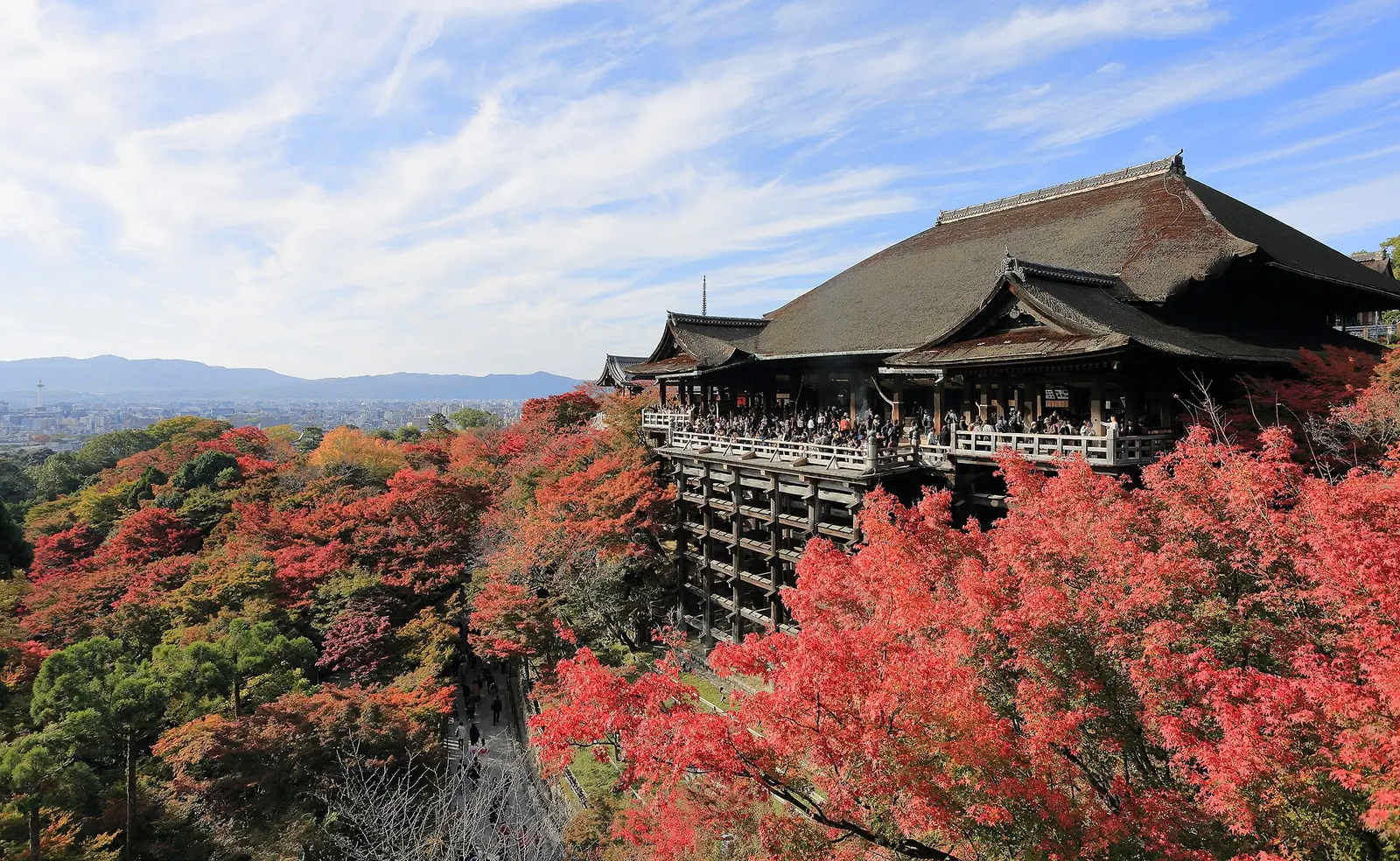
Higashiyama's stone-paved lanes between Kiyomizu-dera and Yasaka Shrine are Kyoto's most photographed streets, and also its most crowded by midday — tour groups moving in both directions through lanes barely wide enough for two. The same streets at 7am are close to empty, shopfronts still shuttered, the light low and warm through the lane's narrow gaps. Walking Higashiyama twice, once at opening and once after the evening tour buses have left, shows two genuinely different neighbourhoods sharing the same address.
Arashiyama beyond the bamboo grove
Arashiyama's bamboo grove is the single most reproduced image of Kyoto after Fushimi Inari's gates, and it's genuinely worth seeing — but the grove itself is a five-minute walk, and most visitors do exactly that and no more. The area rewards continuing past it: Okochi Sanso villa's garden, built by a silent-film actor and considerably quieter than the grove; the Togetsukyo bridge over the Katsura river at dusk, when the day-trip crowds have thinned toward their trains back to the city centre.
Ohara, the neighbourhood most visitors skip entirely
Ohara sits far enough outside central Kyoto — roughly an hour by bus — that most standard itineraries drop it, which is precisely the argument for including it. Sanzen-in's moss garden, considerably less visited than the city-centre temples, is at its best in the same November window that draws crowds everywhere else, without the crowds. It's a full half-day commitment given the distance, but it's the clearest example in the city of how much a short bus ride out of the centre changes the experience.
Why the second walk matters
Kyoto's major sites are built to be walked through, not stood in front of, and a single pass tends to produce the same photograph everyone else takes at the same angle at the same time of day. A second walk, timed deliberately for a different hour or done in the opposite direction, tends to surface the details a first pass misses — the specific angle a shrine's roofline catches morning light, a side street off the main lane that the first walk missed entirely because it was moving with the crowd rather than against it.
A practical note on timing
The 6am-9am window, before most sites' official opening hours end their special early access, is worth structuring entire mornings around during a Kyoto stay. It requires an early alarm and, in November, a proper coat. It also produces the version of Kyoto most visitors only see in photographs and never in person.