Photography
Shooting the Namib at First Light
5 MARCH 2026
Why first light and not sunset
Most photographs of Sossusvlei you'll have seen were taken at sunrise, and there's a practical reason beyond the light: the gate to the dunes opens at dawn, and the short window before the heat sets in and the tour vehicles arrive is the only time the famous curves of Dune 45 or Big Daddy are both well lit and empty of footprints. By 9am the ridgelines are scuffed with tracks and the light has flattened into the harsh overhead white that dominates most of the Namib day.
The climb itself
Dune 45 is the standard sunrise climb — steep, soft sand, no real technical difficulty, but slower going than it looks. Plan to start climbing in near-darkness to reach the ridge as the sky lightens, which means headlamps and a guide who knows the route well enough to avoid the softest sand. The reward is a ridge-line vantage with the dune's own shadow stretching out across the pan below, changing shape by the minute as the sun climbs.
Deadvlei's different problem
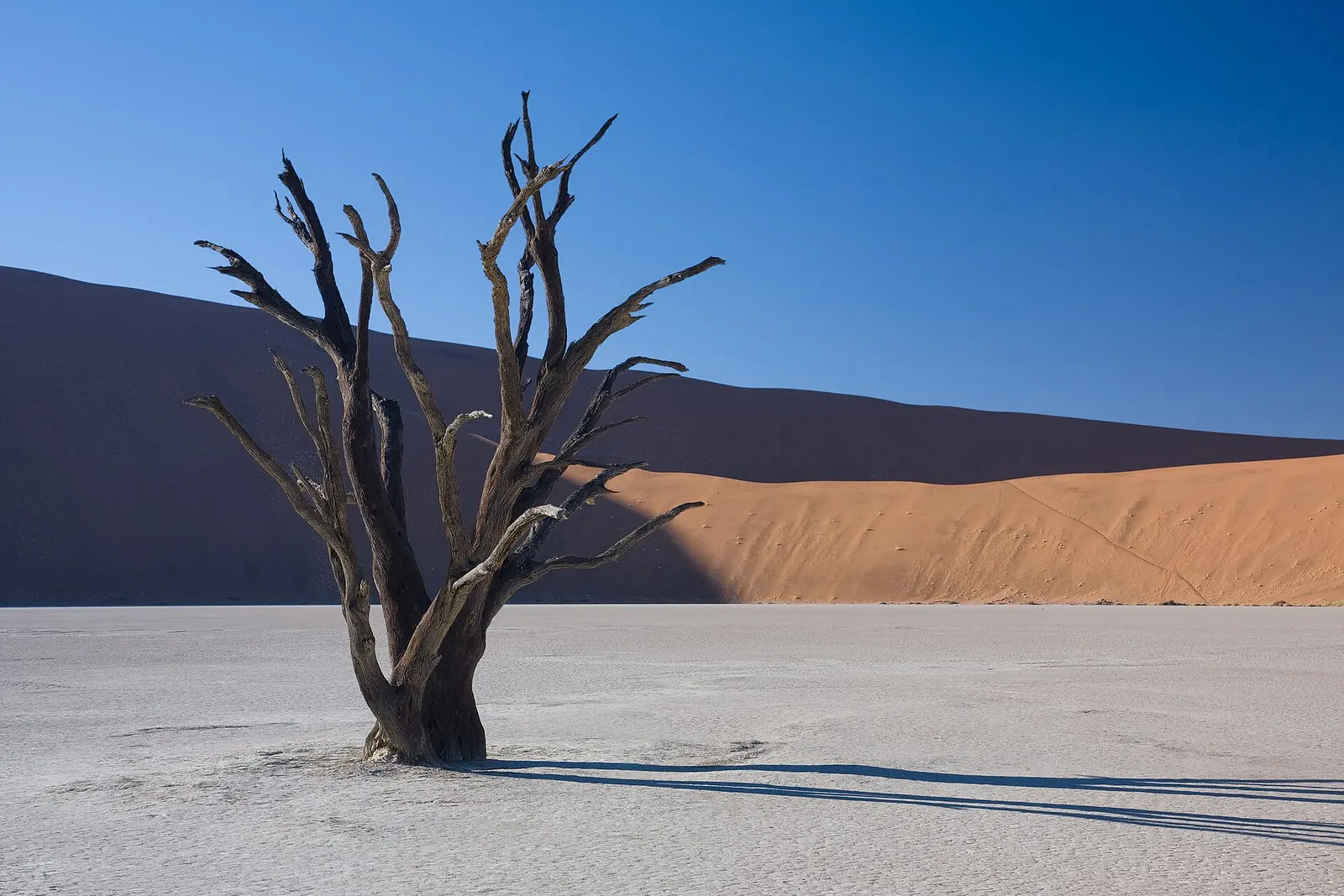
Deadvlei, the white clay pan a short walk beyond Dune 45's base, poses the opposite challenge: less about climbing and more about waiting. The 900-year-old camel-thorn skeletons that give the pan its reputation are photogenic all day, but the wall of red dune behind them only catches direct light for a narrow window after sunrise, before the pan's white floor blows out the exposure. A graduated filter or a bracketed exposure handles the contrast better than a single frame will.
Equipment that actually earns its weight
Sand is the Namib's real equipment hazard, not heat. A wind gust at the top of a dune will find every gap in a camera bag, so a simple rain cover doubles as sand protection, and a rocket blower is worth more than a lens cloth for on-site cleaning — wiping sand across glass scratches it. A mid-range zoom, 24-70mm equivalent, covers most of the dune work; a longer lens matters more later in the trip, for the desert-adapted elephant in Damaraland.
Beyond the dunes
The Skeleton Coast section of the trip is a different kind of light entirely — flat, fog-diffused, and better suited to the wrecked ships and cold Atlantic surf than to the warm dune palette further south. Shooting both halves of the route well means resetting expectations partway through: less golden hour drama, more overcast texture, and a coastline that photographs best in the fog it's named for.